founders notes

L'impact de nos choix — The impact of our choices 

French
English
François Normandeau

Origine : du verbe latin oriri, qui signifie « se lever » ou « apparaître au-dessus de l'horizon »

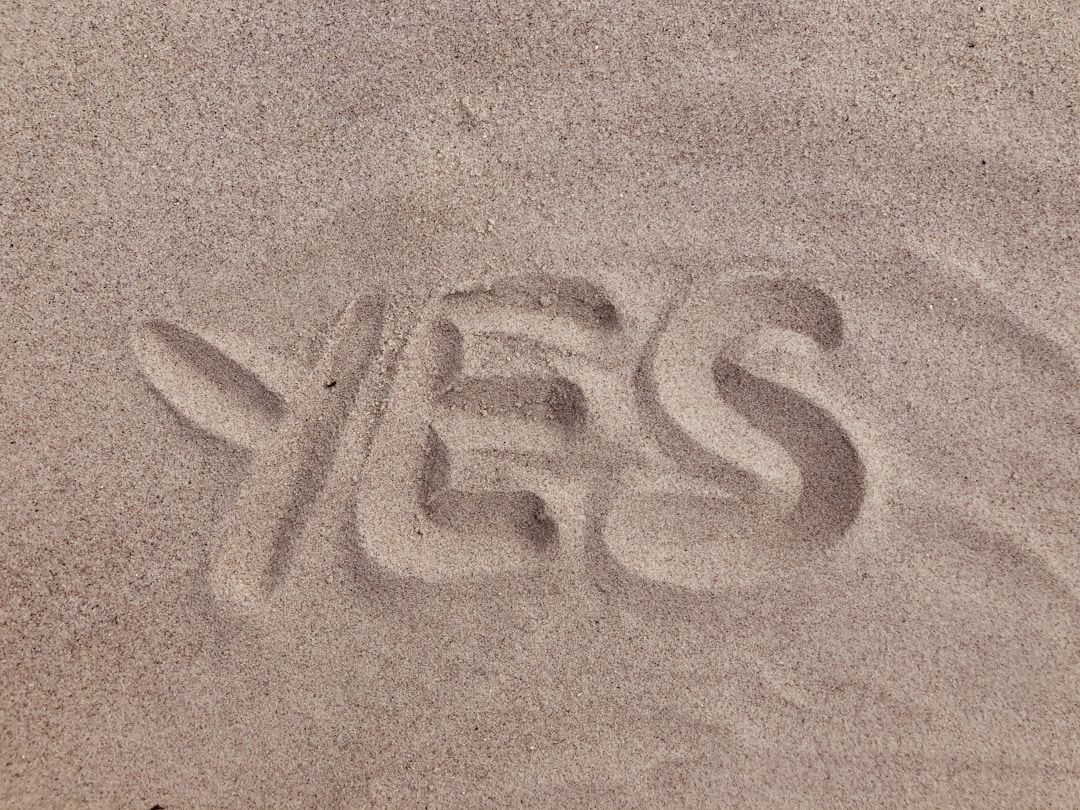
oui-yes
Il existe, dans une vie, des moments presque invisibles qui en redessinent pourtant toute la géographie. Sur le moment, ils semblent modestes, ordinaires, parfois même insignifiants. Ce n’est qu’avec le recul que l’on comprend qu’ils ont déplacé quelque chose d’essentiel, qu’ils ont infléchi la trajectoire entière de notre existence.

D’une certaine manière, The French Club existe parce que ma femme a eu un cancer.

Pendant la dernière année de sa vie, je me suis occupé d’elle chaque jour. Ce fut une période de fatigue, de présence, d’attention constante, mais aussi de dépouillement intérieur. Quand on accompagne vers la fin celle que l’on aime, beaucoup de choses tombent. Les distractions tombent. Les certitudes tombent. Les ambitions superficielles tombent. Il reste alors des questions plus nues, plus exigeantes, plus vraies. Je réfléchissais à la vie et au travail, au devoir et à l’amour, à la fidélité, au sacrifice, à la joie, à l’éthique, aux besoins humains, à la fragilité de toute chose, et à ce que signifie, au fond, être vivant.

Dans une telle proximité avec la souffrance, la mort cesse d’être une idée lointaine. Elle devient une présence. Et, avec elle, surgit inévitablement une autre question : que faisons-nous du temps qui nous est accordé ?

Lorsqu’elle est morte, après plus de trente années de vie commune, j’avais l’impression de ne plus savoir grand-chose. La perte a cela de particulier qu’elle arrache les faux appuis. Elle réduit le monde à l’essentiel. Elle enlève le bruit, les illusions, les réponses toutes faites. Mais au cœur même de ce dénuement, une évidence s’est imposée à moi avec une force irréfutable : je ne voulais pas traverser cette existence sans laisser de trace. Je ne voulais pas mourir en ayant vécu de façon quelconque, sans avoir rien bâti qui dépasse ma seule personne, sans avoir apporté quelque chose de réel au monde.

C’est dans cet espace de douleur, de lucidité et de silence qu’une intention nouvelle a commencé à prendre forme. Non pas comme une ambition extérieure, mais comme une nécessité intérieure. Il fallait construire. Il fallait transmettre. Il fallait créer quelque chose qui porte du sens, du lien, du mouvement, quelque chose qui puisse exister au-delà de moi. En ce sens, The French Club est né de cette année-là. Il est né de l’amour, de l’épreuve, de l’accompagnement, et de cette confrontation intime avec la finitude.

Mais aucun destin ne naît d’un seul moment. En remontant le fil des années, je vois maintenant d’autres points d’inflexion, plus anciens, plus silencieux, qui avaient déjà préparé le terrain.

En 2017, je me suis installé en Espagne. À mon arrivée, je suis allé à l’université locale avec l’idée d’apprendre l’espagnol. Le cours était complet. On m’a alors proposé une autre possibilité : le catalan. J’ai accepté. Ce oui, en apparence mineur, a ouvert une porte que je n’aurais jamais pu prévoir. J’ai sympathisé avec la professeure, qui avait vécu à Londres, comme moi. Quelques semaines plus tard, elle m’a demandé si j’accepterais de remplacer le professeur de français qui s’apprêtait à partir.

J’ai hésité. Puis une pensée très simple m’a traversé : si je refuse, je ne saurai jamais. Alors j’ai dit oui.

Ce oui-là fut lui aussi un point d’inflexion.

Avec le recul, je perçois mieux la chaîne invisible qui relie ces moments entre eux : accepter d’enseigner le français, m’installer en Espagne, choisir l’Espagne parce que les parents de ma femme avaient un appartement à Alicante, et plus tôt encore, choisir d’aimer cette femme, de construire ma vie avec elle, de marcher à ses côtés pendant plus de trente ans. Chacune de ces décisions portait déjà en elle les suivantes. Chacune contenait un avenir que je ne pouvais pas encore lire.

Une vie ne bascule pas toujours dans le fracas d’un grand événement. Souvent, elle se transforme plus discrètement, par accumulation, par fidélité à quelques choix, par consentement à ce qui se présente, par des oui prononcés sans savoir qu’ils engagent déjà tout le reste. Ce n’est qu’après coup que l’on distingue la forme du chemin.

The French Club n’est donc pas seulement un projet. C’est l’aboutissement provisoire d’une longue chaîne de décisions humaines, de hasards féconds, d’amour vécu jusqu’au bout, et d’une perte qui m’a obligé à regarder ma propre existence avec une honnêteté plus radicale. Ce que j’ai voulu créer, au fond, ce n’est pas simplement une structure, une communauté ou un espace d’apprentissage. J’ai voulu créer une trace vivante. Quelque chose qui relie, qui élève, qui accompagne, qui ouvre des possibles pour d’autres.

Peut-être est-ce cela, finalement, un point d’inflexion : le moment où la vie, par la douceur ou par l’épreuve, nous contraint à devenir plus conscients de ce que nous faisons de notre passage sur terre, et à choisir, enfin, le sens que nous voulons donner à la suite du chemin.
François Normandeau

Origin: from the Latin verb oriri, which means "to rise" or "to appear above the horizon".

oui-yes
There are moments in a life that are almost invisible, yet they quietly redraw the entire geography of our existence. At the time, they seem modest, ordinary, sometimes even insignificant. Only later do we realize that something essential shifted, that the trajectory of our life was gently but irrevocably altered.

In a certain way, The French Club exists because my wife had cancer.

During the final year of her life, I cared for her every day. It was a time of fatigue, presence, and constant vigilance, but also of profound inner stripping away. When you accompany the person you love toward the end of life, many things fall away. Distractions fall away. Certainties fall away. Superficial ambitions fall away. What remains are questions that are more exposed, more demanding, more real. I found myself reflecting on life and work, on duty and love, on loyalty, sacrifice, joy, ethics, human needs, the fragility of everything, and what it truly means to be alive.

In such proximity to suffering, death stops being a distant idea. It becomes a presence. And with it, another question inevitably arises: what do we do with the time we have been given?

When she died, after more than thirty years of life together, I felt as though I no longer knew very much with certainty. Loss has the peculiar power to tear away our false supports. It reduces the world to what is essential. It removes the noise, the illusions, the ready-made answers. Yet in the very center of that emptiness, one truth imposed itself with unmistakable clarity: I did not want to pass through this life without leaving a trace. I did not want to die having lived in an ordinary, forgettable way, without having built something that outlived my own person, without having contributed something real to the world.

It was in that space of pain, clarity, and silence that a new intention began to take shape. Not as an outward ambition, but as an inner necessity. Something had to be built. Something had to be transmitted. Something meaningful had to be created, something capable of generating connection, movement, and possibility, something that could exist beyond me. In that sense, The French Club was born from that year. It was born from love, from trial, from care, and from an intimate confrontation with the limits of life itself.

But no destiny emerges from a single moment.

When I trace the thread of the years backward, I can now see other inflection points, older, quieter ones, that had already begun to prepare the ground.

In 2017, I moved to Spain. Shortly after arriving, I went to the local university with the idea of learning Spanish. The class was full. They offered me another option instead: Catalan. I said yes. That seemingly minor yes opened a door I could never have predicted. I became friends with the teacher, who, like me, had lived and worked in London. A few weeks later, she asked whether I would consider replacing the French teacher who was leaving the university.

I hesitated. Then a very simple thought crossed my mind: if I say no, I will never know. So I said yes.

That yes, too, became an inflection point.

Looking back now, I can see the invisible chain connecting these moments: agreeing to teach French, moving to Spain, choosing Spain partly because my wife’s parents had an apartment in Alicante, and earlier still, choosing to love the woman who became my wife, choosing to build a life alongside her for more than thirty years. Each of those decisions already contained the ones that would follow. Each one carried within it a future I could not yet see.

A life does not always change through one dramatic event. More often it transforms quietly, through accumulation, through fidelity to a few choices, through a willingness to accept what life places before us, through yeses spoken without realizing that they are already shaping everything that comes after. Only in retrospect does the path reveal its form.

The French Club, therefore, is not simply a project. It is the provisional result of a long chain of human decisions, fortunate coincidences, a deeply lived love, and a loss that forced me to look at my own life with a deeper honesty. What I ultimately wanted to create was not merely an organization, a community, or a place for learning. I wanted to create a living trace, something that connects people, elevates them, accompanies them, and opens possibilities for others.

Perhaps that is what an inflection point truly is: the moment when life, through gentleness or through trial, compels us to become more conscious of what we are doing with our time on earth, and to choose, at last, the meaning we wish to give to the rest of the journey.


There are moments in a life that are almost invisible, yet they quietly redraw the entire geography of our existence. At the time, they seem modest, ordinary, sometimes even insignificant. Only later do we realize that something essential shifted, that the trajectory of our life was gently but irrevocably altered.
François Normandeau
Created with