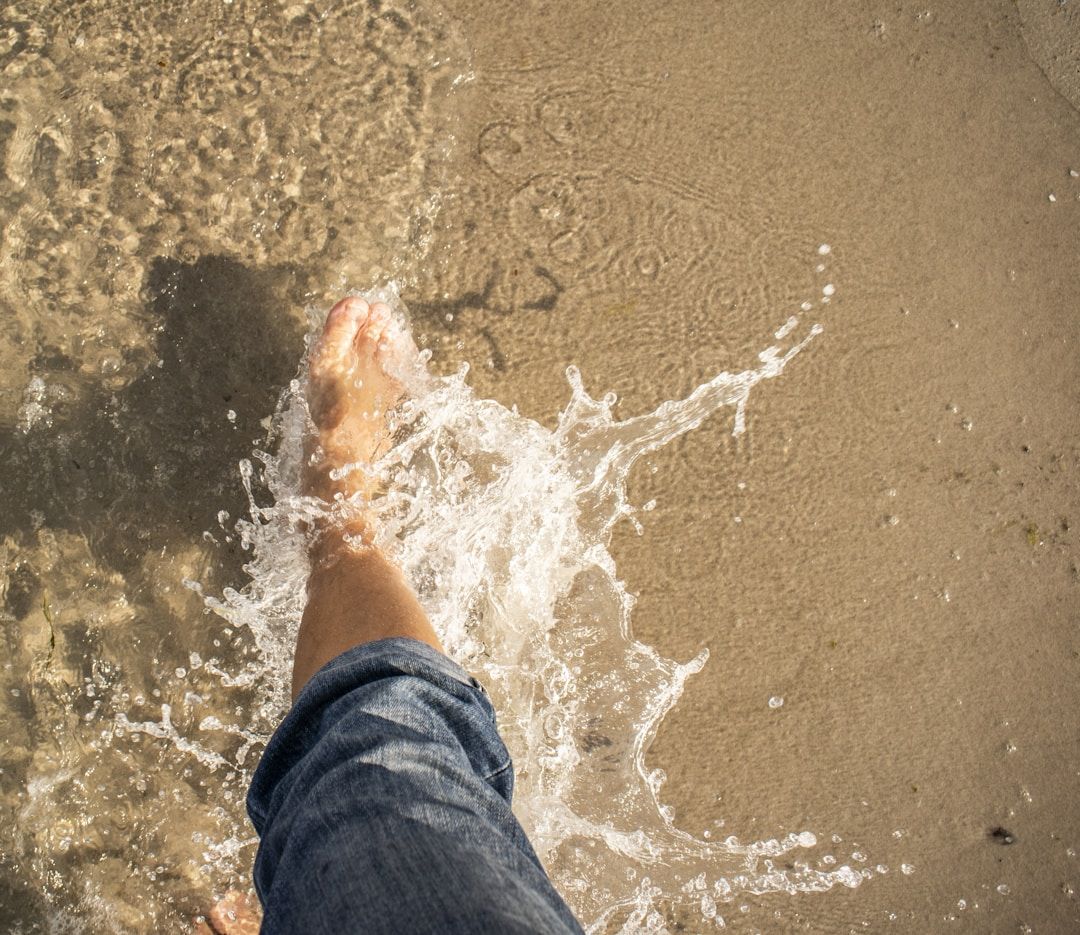
Last December, on a beach east of Saint-Tropez where older men surf even in the cold, I went into the water.
I had come to do something I had prepared quietly, for no one but myself. I stood where the sand meets the sea and thought about my father, the first person to leave me, gone before I was three. He taught me subtraction before I could name it: that a room you count on can empty overnight, that people go while you sleep.
That afternoon I turned and looked at all of it, the full Méditerranée, and then I walked into it. I willfully and willingly let go, one thing at a time, of everything in me that no longer served, of things long gone but still in me. My dad and the troubled relationship with him, but not only. Some flaws as well, and old memories of old wounds and injuries, done unto others and done unto me. The cold took everything that could go. I came up the sand after many long minutes, lighter. Emptied. Ready. The sensation I will never forget was feeling cleansed all the way to my soul and that stayed with me for days and days, while almost no one knew.
Six months later, I met someone. After a long life, and after a loss some of you know about, I had stopped expecting love to come again, asking nothing. It came.
I do not think those two things are unrelated.
A life cannot only gather. Some things I have set down on purpose; others were taken from me, a house, a marriage, a father, and I was not asked. But nothing more can be added to a room already too full of too many things. Everything of value in my life, beyond what money can buy, came into it because there was a time and a space to welcome it. Sometimes we have to hollow that space out ourselves, an emptiness kept open on purpose, so that something new can find its way in. I walked into that water so that a part of myself, and bits and pieces, old times and old days and the smaller men I used to be, could be let go. I was making room. To go on living, we have to go on letting things fall off and move away, deliberately, so the next thing has somewhere to stand.
And meanwhile, work often feels like a duty mixed with adventure. On the hard days I do not ask whether it is worth it. I ask whether I am doing it well. For the twenty-five years of my life as a commodities trader, work and I kept a simpler and more rational arrangement. This new one, The French Club, is truer and much more personal.
Today I turn fifty-six. An old life set down in cold water on a coast I chose. A new life rising beside the person I love, combined with work that feels like a life of service often.
French keeps a word for the place I am standing now, on this birthday. Le seuil. The threshold. The doorway from one room into the next. You do not cross it without leaving a room behind. That is the law, in every language that exists.
It is never too late to lay down what was never yours to carry. No one hands you permission to walk in. You decide, and you wade in and move forward.
Ever forward onward.
François
The French word Méditerranée translates to the Mediterranean Sea in English. Its etymology traces back to the Latin mediterraneus (inland, or in the middle of land), combining medius (middle) and terra (land, earth): "the sea in the middle of the earth."
Why Learning Any Languages Feels Difficult? What French Reveals About the Human Mind
Copyright © 2026
Created with